Introduction
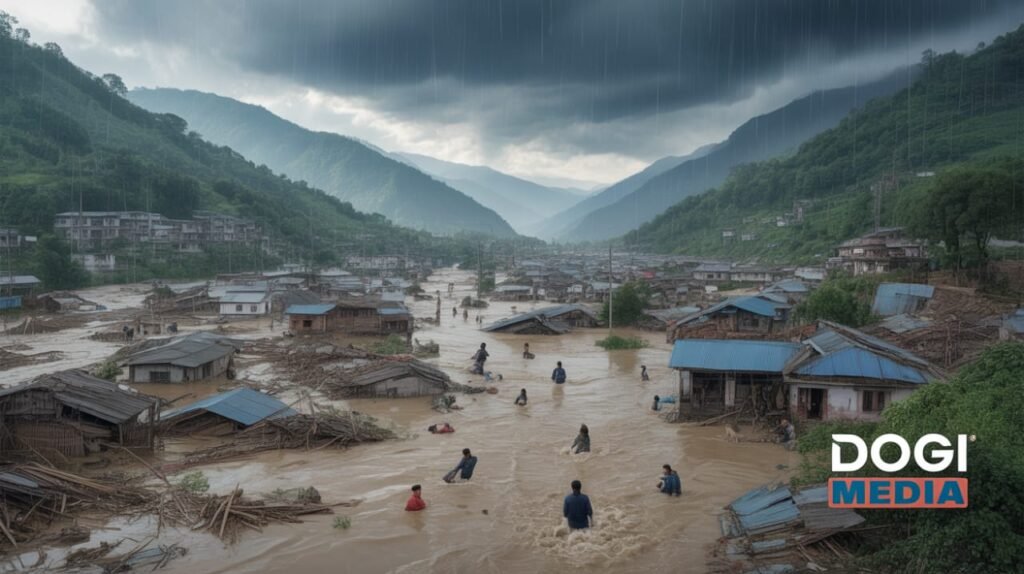
Natural disasters have always challenged human survival, yet the increasing frequency and intensity of recent floods in India expose a much larger issue. The devastating floods in Uttarakhand and Manipur once again remind us of the fragility of our climate system. These disasters no longer occur as isolated events; they follow recurring patterns that reveal the dangerous effects of global warming, deforestation, unplanned urbanization, and fragile ecosystems. Moreover, the destruction has gone beyond property loss—thousands of lives suffer disruptions, and entire communities face severe humanitarian crises.
In this blog, we will explore the floods in Uttarakhand and Manipur in detail, analyze the factors driving these natural calamities, discuss their socio-economic impact, and highlight the urgent need for sustainable action. Additionally, we will explain how platforms like Dogi Media can help raise awareness and encourage collective responsibility to build climate resilience.
Understanding the Floods in Uttarakhand
The Geographical Fragility of Uttarakhand
Uttarakhand, often known as the “Land of the Gods,” is a beautiful Himalayan state that attracts millions of pilgrims and tourists every year. However, its geographical location also makes it highly vulnerable to natural disasters. Being located in the fragile Himalayan ecosystem, the state is prone to landslides, flash floods, and cloudbursts.
In 2025, relentless rainfall in Uttarakhand led to unprecedented flooding, which caused landslides and severe destruction across towns like Rudraprayag, Chamoli, and Uttarkashi. Thousands of people were displaced, road networks were washed away, and bridges collapsed under the pressure of swollen rivers.
Why is Uttarakhand So Vulnerable?
Rapid urbanization in hilly terrain: Expansion of roads, hotels, and housing projects without proper planning has weakened the land.
Deforestation: Trees that once held soil together have been cut down, increasing the risk of landslides.
Hydropower projects: Numerous dams and power projects have disturbed the natural flow of rivers.
Climate change: Rising global temperatures have changed rainfall patterns, resulting in heavier-than-normal monsoons.
Human Cost of the Disaster
While property damage was enormous, the human cost was even more tragic. Hundreds lost their lives, while thousands became homeless overnight. Families were separated, and many villages were completely cut off from relief due to washed-away roads. Furthermore, the mental trauma of survivors is immeasurable, as they not only lost homes but also their loved ones.
The Floods in Manipur
A Different Geography, A Similar Tragedy
While Uttarakhand represents the fragile Himalayan ecosystem, Manipur, a northeastern state, presents a completely different landscape. Known for its lush valleys and beautiful hills, Manipur has traditionally received heavy rainfall. However, the intensity of rain in 2025 was unprecedented, leading to massive floods that submerged several towns.
The Causes Behind Floods in Manipur
Shifting rainfall patterns due to climate change caused sudden and heavy downpours.
Encroachment on wetlands and river banks reduced the natural capacity to hold excess water.
Soil erosion from deforestation and shifting cultivation practices added to the flooding.
Poor drainage infrastructure in Imphal Valley worsened the waterlogging crisis.
Impact on People
The floods submerged thousands of homes, destroyed farmlands, and left communities without food, shelter, or clean drinking water. Relief camps quickly became overcrowded, and health concerns such as waterborne diseases began to rise. Just like in Uttarakhand, the disaster exposed how fragile the local ecosystem had become and how unprepared the state was for such emergencies.
Similarities Between the Two Disasters Uttarakhand and Manipur
Although Uttarakhand and Manipur differ greatly in geography, the disasters they faced in 2025 reveal striking similarities. Both regions mainly suffered due to:
Climate change, which intensified extreme rainfall.
Unplanned development that ignored environmental concerns.
Weak infrastructure, unable to withstand repeated natural shocks.
Constant human intervention, which disrupted ecological balance.
These similarities clearly show that climate fragility does not remain confined to a single state or region. Instead, it spreads across the nation and creates global consequences.
The Climate Connection
How Climate Change Intensifies Floods
Global warming disrupts traditional weather cycles. With rising temperatures, glaciers melt faster, and monsoon rainfall becomes more erratic. Consequently, heavier downpours now occur within shorter durations, and the land as well as rivers fail to manage the excess water. As a result, flash floods strike with increasing frequency.
In Uttarakhand, melting glaciers and sudden cloudbursts triggered destructive flooding. In Manipur, monsoon rainfall patterns shifted unpredictably, which led to extreme waterlogging. Clearly, climate change does not remain a future concern—it already reshapes the way disasters unfold.
Scientific Warnings Ignored
For years, scientists and environmentalists warned about India’s fragile ecosystems, especially in the Himalayas and Northeast. Nevertheless, policymakers prioritized economic development over ecological safeguards. Consequently, repeated neglect and weak enforcement of stricter environmental protection worsened the vulnerabilities we now witness.
Socio-Economic Impact of Floods in Uttarakhand and Manipur
Economic Losses
The floods inflicted enormous economic setbacks. They destroyed roads, bridges, power lines, and large sections of agricultural land. In Uttarakhand, tourism—one of the state’s major income sources—suffered heavily because pilgrim routes closed for weeks. Meanwhile, in Manipur, farmers lost their crops, which served as their primary livelihood.
Social Disruption
Floodwaters displaced thousands of families, and children quickly lost access to schools. Consequently, entire communities had to rely on relief camps for survival. Moreover, migration to other regions increased, which in turn placed additional pressure on already crowded urban centers.
Health Concerns
The floods triggered a wave of health challenges. Waterborne diseases spread rapidly, poor sanitation worsened conditions, and overcrowded camps created new risks. Moreover, mental health struggles such as trauma and anxiety grew silently, and authorities often overlooked them during relief measures.
Government Response and Challenges
Relief Efforts
Both states received assistance from the National Disaster Response Force (NDRF), Indian Army, and local NGOs. Helicopters were used to air-drop food and medical supplies in inaccessible areas. Temporary shelters and relief camps were set up.
Challenges Faced
Slow response in reaching remote areas.
Inadequate preparedness for recurring disasters.
Corruption and mismanagement in distributing relief funds.
Lack of long-term planning to prevent future floods.
Although immediate relief was provided, the deeper question remains: why are such disasters repeating every few years, and why are the lessons from past tragedies not implemented?
The Role of Media in Highlighting the Crisis at Uttarakhand and Manipur
Why Media Matters
Media coverage ensures that the voices of flood victims are heard across the nation. Without continuous reporting, many issues such as delayed relief or ignored communities would remain invisible.
How Dogi Media Can Contribute
Dogi Media, as a modern digital platform, can amplify awareness about climate fragility by:
Publishing ground reports from affected regions.
Sharing human stories of survivors to build empathy.
Educating people about climate change and preparedness.
Holding authorities accountable through fact-based reporting.
Promoting sustainable practices at community levels.
By becoming a bridge between affected communities, policymakers, and the general public, Dogi Media can push the conversation beyond temporary sympathy and toward real action.
The Way Forward: Building Climate Resilience in Uttarakhand and Manipur
Sustainable Development
Development must be balanced with environmental preservation. Projects in fragile regions should undergo stricter environmental assessments.
Restoring Ecosystems
Reforestation, wetland conservation, and soil restoration are crucial to reduce the risk of floods.
Stronger Infrastructure
Drainage systems, embankments, and early-warning systems need to be upgraded in both urban and rural areas.
Community Preparedness
Local communities should be trained in disaster management, evacuation plans, and first-aid response.
Policy Reforms
Governments must prioritize climate adaptation strategies and invest in resilient infrastructure rather than just focusing on post-disaster relief.
Global Lessons from Local Tragedies
The floods in Uttarakhand and Manipur do not occur in isolation. Similar tragedies have affected people in Pakistan, Bangladesh, Nepal, and China. Therefore, the lessons from these Indian states carry global importance. Unless nations take collective action against climate change, disasters will intensify, and more lives will face serious risks.
Conclusion
The floods in Uttarakhand and Manipur serve as a painful reminder of how fragile our climate system has become. Although we cannot prevent natural disasters entirely, we can certainly reduce their intensity and impact through sustainable development, stronger policies, and responsible behavior.
Ultimately, these tragedies highlight the urgent need for collective action. Governments, communities, and media organizations like Dogi Media must unite to raise awareness, promote preparedness, and demand accountability. By working together, we can transform vulnerability into resilience and protect lives from future climate-driven disasters.
The time to act is now. Every delay puts more lives at risk, and every ignored warning pushes us closer to irreversible damage. Therefore, the floods of Uttarakhand and Manipur should not remain just tragic events of 2025. Instead, they must become turning points that push us toward a more sustainable and climate-conscious future.
Read More Blogs : https://dogimedia.com/blog/
Subscribe Now : https://youtube.com/@xworldconsultancy
Follow Us On Instagram : https://www.instagram.com/xworldconsultancy
Follow Us On X : https://x.com/xwconsultancy
Nice article bohot achi hai
Wonderfu story
Bohot hi informative article hai
Padh kar accha laga
Good info
Nice information
So sad
Suddenly rising change
🌦️🌦️🌦️🌦️🌥️
Amazing Article for knowing about floods in Uttarakhand This is very informative article
Nice information 👍
This is because of fast development
Uttarakhand floods are very beautiful Himalaya State that attracts millions of pilgrims and more tourist in every year
Good
“Prayers for everyone affected in Uttarakhand and Manipur 🙏 Stay strong and stay safe.”
Water every where
Very Nice
Good information
Danger flood in uttrakhand , other state but nice article for flood information
Good
This is because of global warming
This is because of development
It’s very sad to hear this…. God bless them.
Very nice
Good information 💯
Nice information
Good
Very very good
Good
It’s a nice good information love u
“Maine ye article apne friends ko bhi share kiya, kyunki isme floods ke causes aur unke impacts bahut clearly samjhaye gaye hain. Har kisi ko padhna chahiye.”
Natural disaster have always challenge human survival year the increasing frequency and intensity of recent flood India expose a larger issue.
Uttarakhand mein bahut badhiya bhai hai prakrutik aapda Uttarakhand walon Ko pahle ki Shakti De
Thankyou for giving us this information…. This very sad . people lost there houses. We should help them
Supar ♥️👍👍
Humare paryavaran me kafi badlav aaya h jiska risun manusya hi h manusya hi pedo ko katata h or paryavaran ko pradusit karna h jisase usko hi bhari nuksan hota h hume pedo ko nhi karna chahiye ped lagana chahiye jijase humari bhogolik paryavaran bna rhe
Nice 👍👍
👍
Is topic se kam se kam baha ki jankari to mili 🙏
Nice 🙂
Super
Nice
Nice
Very important information
Good
Humare paryavaran me kafi badlav aaya h jiska risun manusya hi h manusya hi pedo ko katata h or paryavaran ko pradusit karna h jisase usko hi bhari nuksan hota h hume pedo ko nhi karna chahiye ped lagana chahiye jijase humari bhogolik paryavaran bna rhe
Doogi Media.com is one of the most unprofessional and unreliable companies I have ever come across. Their services are misleading, their promises are false, and they completely waste customers’ time and money. The company shows no transparency and has zero customer support. I strongly advise everyone to stay away from Doogi Media.com. If you value your time, money, and peace of mind, please avoid dealing with them at all costs.”
Great
Nice 🙂
Prey for public of uttrakhand and manipur
This article gives a clear and thoughtful view of the floods in Uttarakhand and Manipur. It explains not only the disasters but also the reasons behind them like climate change and unplanned development. The focus on people’s struggles and the need for sustainable action makes it very meaningful and eye-opening.
Great
Bohot hi informative article hai padh kar accha laga
😭😭😭😭😭
🤷🤷🤷🤷🤷
Role of media in showing such new is very unrealistic…
But thanks to this article .for perfect information ☺️
Perfect information 😀
Nice