Introduction
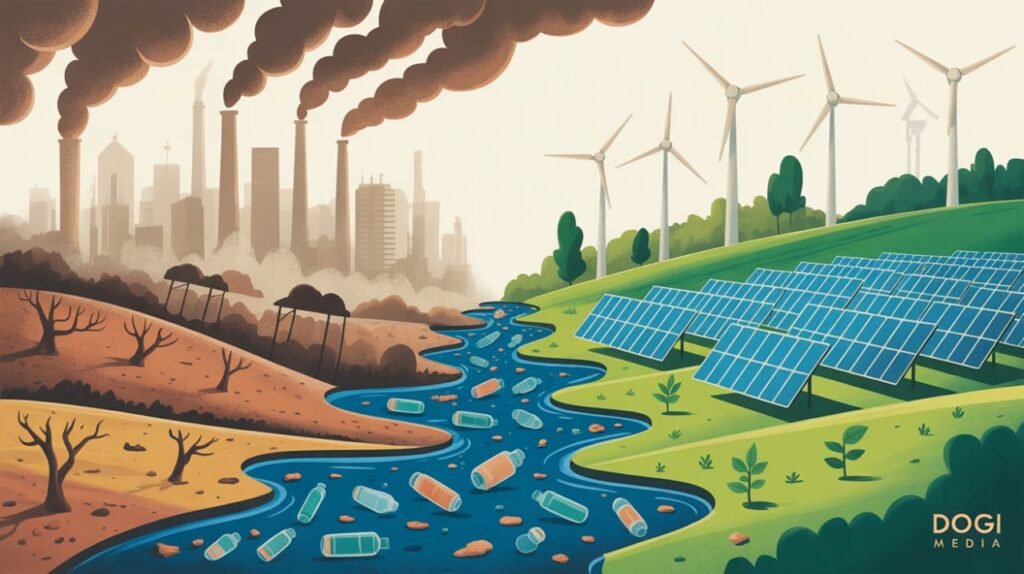
India, a land of diverse landscapes and cultures, is also facing a diverse range of environmental issues. From air and water pollution to deforestation and climate change, the nation is struggling to balance economic growth with ecological sustainability. The problem of environmental issues in India has grown severe over the past few decades, impacting not only nature but also the health and livelihood of millions.
While development is necessary, ignoring environmental balance can lead to long-term damage. Therefore, it is crucial to understand the core causes, major challenges, and possible solutions to these pressing concerns. In this blog, we will explore the key environmental issues in India, their root causes, and the steps that can lead the nation toward a sustainable future.
Air Pollution: The Silent Killer
The Extent of Air Pollution
Air pollution remains one of the most alarming environmental issues in India. According to global studies, several Indian cities, including Delhi, Kanpur, and Lucknow, often rank among the world’s most polluted cities. The concentration of particulate matter (PM2.5 and PM10) frequently exceeds the safe limits recommended by the World Health Organization (WHO).
Causes of Air Pollution
There are multiple sources of air pollution in India. Vehicle emissions, industrial discharges, burning of crop residue, and construction dust contribute heavily. Additionally, the excessive use of fossil fuels for power generation adds to the worsening air quality. Due to these factors, millions suffer from respiratory problems every year.
Impact on Health and Environment
Air pollution not only affects humans but also harms animals, plants, and the climate. It leads to smog formation, reduced visibility, and acid rain. More importantly, it increases the risk of lung cancer, asthma, and heart diseases. Moreover, it impacts agricultural productivity, causing crop losses due to ozone exposure.
Possible Solutions
To combat air pollution, India needs strict implementation of emission norms, better waste management, and promotion of electric vehicles. Furthermore, industries must adopt cleaner technologies, and farmers should be encouraged to use sustainable methods instead of burning stubble. Increasing green cover through urban plantations can also improve air quality.
Water Pollution: A Growing Threat for Environmental Issues
The State of Water Bodies
Water pollution has emerged as another major environmental issue in India. Many rivers, including the Ganga and Yamuna, are severely contaminated with industrial effluents, sewage, and plastic waste. The lack of proper waste treatment facilities worsens the condition further.
Causes of Water Pollution
The discharge of untreated industrial wastewater and domestic sewage directly into rivers and lakes is one of the biggest causes. Moreover, agricultural runoff containing pesticides and fertilizers adds toxic chemicals to groundwater. Plastic pollution and religious offerings also contribute significantly to water contamination.
Health and Ecological Impact
Contaminated water leads to serious diseases like cholera, typhoid, and diarrhea. It also destroys aquatic life, reduces oxygen levels in water, and affects biodiversity. In rural areas, where people depend on rivers for drinking and irrigation, the situation is even more alarming.
Solutions and Government Initiatives
The Indian government has launched several programs, such as the Namami Gange Mission, to clean major rivers. However, the success of these initiatives depends on strict enforcement, public participation, and continuous monitoring. Additionally, industries must be held accountable for treating their waste before discharge.
Deforestation and Loss of Biodiversity
The Importance of Forests
Forests are essential for maintaining ecological balance. They provide oxygen, preserve soil, and support countless species. However, India’s forest cover has been shrinking due to human activities such as logging, mining, and agricultural expansion.
Causes of Deforestation
Urbanization, infrastructure development, and industrial expansion have led to massive deforestation. Moreover, illegal logging and shifting cultivation practices in tribal areas contribute further. As a result, the loss of biodiversity has reached alarming levels.
Effects on Climate and Wildlife
Deforestation directly contributes to climate change by increasing carbon dioxide levels. It also destroys wildlife habitats, pushing many species to the brink of extinction. Consequently, ecological imbalance worsens, affecting food chains and natural cycles.
Conservation and Reforestation Efforts
Reforestation and afforestation programs must be promoted across all states. The National Green Mission and Compensatory Afforestation Fund Act aim to restore degraded lands. In addition, involving local communities in forest conservation ensures long-term success.
Climate Change: The Looming Crisis for Environmental Issues
India’s Climate Vulnerability
India is highly vulnerable to climate change due to its vast geography and dependence on agriculture. Rising temperatures, unpredictable rainfall, and frequent natural disasters have already begun to show their impact.
Major Causes
The excessive use of fossil fuels, deforestation, and industrial emissions have increased greenhouse gases in the atmosphere. As a result, heatwaves, floods, and droughts are becoming more common across the country.
Impact on Agriculture and Livelihood
Climate change affects crop yields, leading to food insecurity and economic instability. Farmers face reduced rainfall and unpredictable seasons, making agriculture increasingly risky. Furthermore, the poor and marginalized communities suffer the most.
Steps Toward Climate Action
India has pledged to achieve net-zero carbon emissions by 2070 under the Paris Agreement. Renewable energy, such as solar and wind power, is being promoted. Additionally, awareness campaigns, sustainable farming, and eco-friendly policies are essential to combat climate change effectively.
Waste Management and Plastic Pollution
The Problem of Solid Waste
India generates more than 60 million tonnes of solid waste annually. Unfortunately, most of it ends up in open dumps, causing severe pollution. Improper segregation and disposal methods create health hazards for both humans and animals.
Plastic Waste: A Persistent Challenge
Plastic has become one of the most dangerous environmental issues in India. From packaging to daily-use items, it is everywhere. The non-biodegradable nature of plastic leads to long-term soil and water pollution. Moreover, animals often consume plastic waste, leading to death and diseases.
Government Policies and Citizen Responsibility
The Plastic Waste Management Rules and various state-level bans aim to reduce plastic usage. However, success depends on public cooperation. Citizens must adopt sustainable practices, such as using cloth bags, recycling waste, and avoiding single-use plastics.
Sustainable Waste Solutions
Segregating biodegradable and non-biodegradable waste, promoting composting, and establishing recycling plants can make a huge difference. Moreover, adopting the “Reduce, Reuse, Recycle” principle can help reduce waste generation significantly.
Soil Degradation and Desertification
Causes of Soil Degradation
Overuse of chemical fertilizers, deforestation, and improper irrigation techniques lead to soil degradation. Additionally, overgrazing and mining have worsened the condition in several states.
Impact on Agriculture and Environment
When soil fertility declines, crop yields drop, and farmers struggle to sustain livelihoods. Moreover, erosion and desertification affect water retention and increase carbon emissions. Therefore, addressing soil degradation is vital for food security.
Preventive Measures
Using organic manure, crop rotation, and afforestation are effective ways to restore soil health. Moreover, awareness among farmers about sustainable agricultural practices can prevent long-term damage.
Noise Pollution in Urban India
Sources of Noise Pollution
In cities, constant honking, construction work, and loudspeakers have made noise pollution a common issue. Though often ignored, it has severe health consequences.
Health and Psychological Effects
Continuous exposure to high noise levels leads to stress, hearing loss, and sleep disorders. Moreover, it affects concentration and increases the risk of heart problems.
Preventive Steps
Strict enforcement of noise control laws, soundproofing in industrial zones, and public awareness can help reduce this overlooked problem.
The Role of Government and NGOs in Environmental Issues
The Indian government has implemented numerous policies to tackle environmental issues in India. Programs like the National Clean Air Programme, Swachh Bharat Mission, and National Action Plan on Climate Change focus on sustainable development. Additionally, NGOs and environmental activists are raising awareness through campaigns and community projects.
However, laws alone are not enough. Without collective effort from citizens, industries, and policymakers, the situation cannot improve. Every individual must take responsibility for reducing their ecological footprint.
Technology and Innovation in Environmental Issues Protection
Modern technology can play a huge role in solving environmental issues in India. Artificial intelligence, satellite monitoring, and data analytics can help track pollution levels and predict climate patterns. Moreover, green technologies such as biofuel production, electric vehicles, and renewable energy sources are transforming the way we live.
By adopting smart solutions, India can transition toward a cleaner and greener future. Technology, when combined with awareness, can turn the tide in favor of environmental protection.
Public Awareness and Education
One of the most effective ways to tackle environmental problems is through education. Schools, colleges, and community centers must integrate environmental education into their curriculum. When people understand the importance of sustainability, they naturally adopt eco-friendly habits. Additionally, media platforms and social influencers can spread awareness about conservation efforts.
Conclusion
The growing environmental issues in India are not just ecological concerns—they are also social, economic, and moral responsibilities. Air and water pollution, deforestation, waste mismanagement, and climate change threaten the nation’s health and prosperity. However, with awareness, policy enforcement, and public participation, change is possible.
India has the potential to lead the world in sustainable living if it balances development with environmental protection. Therefore, it’s time for everyone—citizens, industries, and governments—to join hands in building a cleaner, greener, and healthier India.
Read More Blogs : https://dogimedia.com/blog/
Subscribe Now : https://youtube.com/@xworldconsultancy
Follow Us On Instagram : https://www.instagram.com/xworldconsultancy
Follow Us On X : https://x.com/xwconsultancy
Honestly slowed down to read this carefully which is not my default, and a look at builddigitalgrowthpaths kept me in that careful reading mode, the kind of writing that demands attention by being worth attention is rare in a media environment full of content engineered to be skimmed not read with any real focus today.