Introduction
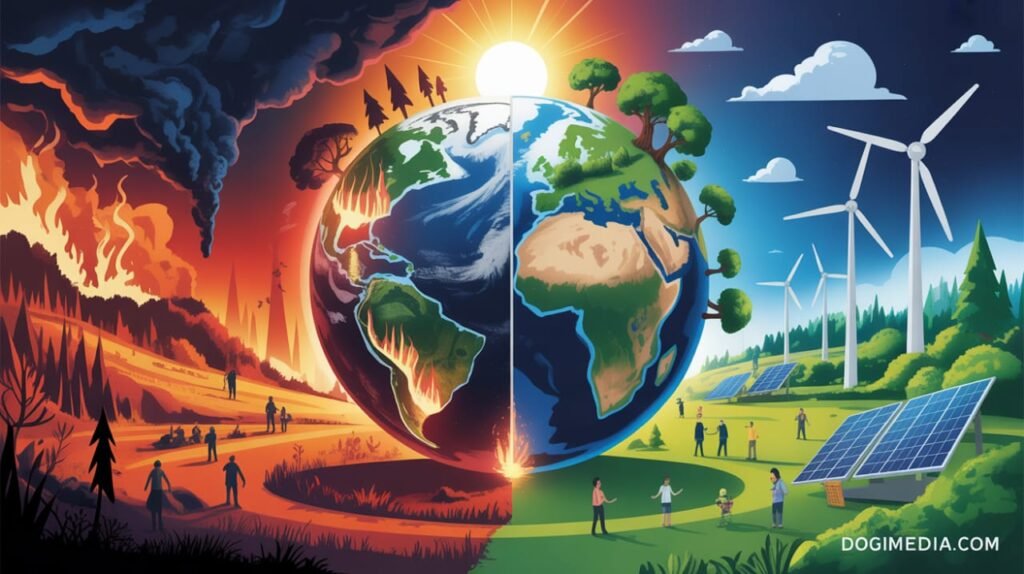
Climate change is no longer a distant threat. It is a reality that affects every aspect of our lives. From rising global temperatures to melting ice caps, from frequent wildfires to unpredictable rainfall, the world is witnessing changes like never before. At the same time, sustainability has emerged as a powerful solution. It is not just about protecting the environment but also about creating a balance between people, planet, and progress. Therefore, this blog explores the urgent issue of climate change and highlights the role of sustainability in shaping a better future.
Understanding Climate Change
Climate change refers to long-term shifts in global temperatures, weather patterns, and natural systems. While natural processes have always caused climatic variations, human activities since the industrial revolution have accelerated these changes drastically. The main culprit is greenhouse gas emissions, especially carbon dioxide, methane, and nitrous oxide. Consequently, the Earth is warming at an alarming rate.
Causes of Climate Change
Greenhouse Gas Emissions
The burning of fossil fuels for energy, transportation, and industry releases vast amounts of carbon dioxide into the atmosphere. As a result, the greenhouse effect intensifies and traps heat.
Deforestation
Forests act as natural carbon sinks. However, large-scale deforestation reduces the Earth’s ability to absorb carbon dioxide. Additionally, cutting trees releases stored carbon, worsening the problem.
Industrialization and Urbanization
Industries, factories, and expanding cities contribute heavily to emissions. Moreover, rapid urbanization increases energy consumption, waste production, and air pollution.
Agriculture and Livestock
Agricultural practices such as excessive fertilizer use release nitrous oxide, while livestock farming emits significant amounts of methane. Hence, food production systems contribute to climate change.
Effects of Climate Change
Rising Global Temperatures
Heatwaves have become more frequent and intense. Therefore, human health, agriculture, and ecosystems are at risk.
Melting Glaciers and Rising Sea Levels
Ice sheets in Antarctica and Greenland are shrinking. Consequently, sea levels are rising, threatening coastal cities and small island nations.
Extreme Weather Events
Hurricanes, floods, droughts, and wildfires are occurring with greater intensity. These events cause massive destruction and economic losses.
Impact on Biodiversity
Species are losing their habitats, leading to extinction risks. Therefore, the natural balance of ecosystems is being disrupted.
Human Health Concerns
Climate change increases the spread of diseases, worsens air quality, and leads to food and water insecurity. As a result, human life is becoming more vulnerable.
What Is Sustainability?
Sustainability is the practice of using resources in a way that meets present needs without compromising the ability of future generations to meet their own. In simple words, it is about living in harmony with nature while ensuring economic and social development.
The Three Pillars of Sustainability
Environmental Sustainability
This focuses on conserving natural resources, reducing emissions, and protecting ecosystems. For example, promoting renewable energy is a key step.
Economic Sustainability
It ensures growth without exhausting resources. Sustainable businesses balance profit-making with environmental and social responsibility.
Social Sustainability
It emphasizes equality, access to resources, education, and healthcare. Therefore, it ensures that communities thrive alongside the environment.
The Link Between Climate Change and Sustainability
Sustainability directly addresses climate change by encouraging eco-friendly practices. For instance, adopting renewable energy reduces dependence on fossil fuels. Similarly, sustainable agriculture lowers emissions from food production. Therefore, sustainability is the most practical path to climate action.
Solutions to Tackle Climate Change
Renewable Energy Adoption
Solar, wind, and hydropower are clean energy sources. Transitioning to them reduces carbon emissions significantly.
Afforestation and Reforestation
Planting trees restores carbon sinks and improves biodiversity. Moreover, it reduces the impacts of air pollution.
Sustainable Agriculture
Using organic farming techniques, reducing fertilizer use, and adopting precision farming can minimize emissions. Additionally, shifting toward plant-based diets can lower methane emissions.
Waste Management
Recycling, composting, and reducing single-use plastics help in lowering pollution. Hence, waste management is vital for sustainability.
Green Transportation
Electric vehicles, cycling, and public transportation reduce emissions from the transport sector. Therefore, promoting green mobility is essential.
International Cooperation
Global problems need global solutions. Agreements like the Paris Climate Accord encourage nations to work together for climate action.
The Role of Governments
Governments play a crucial role in setting policies, regulations, and incentives for sustainable practices. For example, subsidies for renewable energy encourage faster adoption. Furthermore, strict laws against deforestation and pollution ensure accountability.
The Role of Businesses
Businesses must adopt eco-friendly practices. From reducing carbon footprints to creating sustainable supply chains, corporations have a responsibility to lead by example. Therefore, corporate sustainability is a necessity, not a choice.
The Role of Individuals
Every individual has the power to contribute. Simple actions like saving energy, reducing waste, planting trees, and supporting eco-friendly brands can make a big difference. Consequently, collective efforts bring positive change.
Challenges in Achieving Sustainability
Although sustainability offers solutions, challenges remain. Limited awareness, economic constraints, political interests, and resistance to change hinder progress. However, continuous education and collaboration can overcome these barriers.
Future of Sustainability
The future depends on the actions we take today. Innovations in green technology, circular economies, and sustainable cities offer hope. With global cooperation, the transition toward sustainability can be accelerated. Therefore, building a resilient and green future is possible.
Conclusion
Climate change is the defining challenge of our times, and sustainability is the key to addressing it. Although the task is enormous, every step counts. From governments to businesses and individuals, everyone has a role to play. Together, we can slow down climate change, protect biodiversity, and secure a better future for generations to come. Therefore, the time to act is now.
Read More Blogs : https://dogimedia.com/blog/
Subscribe Now : https://youtube.com/@xworldconsultancy
Follow Us On Instagram : https://www.instagram.com/xworldconsultancy
Follow Us On X : https://x.com/xwconsultancy
climate change
Nice article
Superb
The future depends on the actions we take today. Innovations in green technology, circular economies, and sustainable cities offer hope. With global cooperation, the transition toward sustainability can be accelerated. Therefore, building a resilient and green future is possible. 😯😯
Very useful information
Climate change information is good
Climate is change due to our work
Nice information
शुद्ध हवा रहेगा तो मनुष्यो का स्वास्थ्य भी ठीक रहेगा
Good information
Nice information
Climate is bad now
Nice information
Climate
Insightful article! It clearly explains how climate change impacts our planet and why sustainability is crucial for the future. Everyone—governments, businesses, and individuals—has a role to play. Small actions today can make a big difference tomorrow.”
Knowledgeable blog
Nice information
This is some awesome thinking!
Excellent
Nice information
It’s about climate change and sustainability climate change is of our time and sustainability we can Slow Down climate change protect biodiversity and Secure a better future for generation to come before the time to act now
“Climate change demands immediate action, and embracing sustainability is key to securing a livable future for generations to come.”
“Sustainability is no longer a choice, but a necessity to combat climate change and ensure a thriving planet.”
Sustainability is no longer a choice, but a necessity .
Good article 😊
Good article 😊👍
Suprbbbb
Great Article ❤️
Agricultural practices such as excessive fertilizer use release nitrous oxide, while livestock farming emits significant amounts of methane. Hence, food production systems contribute to climate change.Governments play a crucial role in setting policies, regulations, and incentives for sustainable practices. For example, subsidies for renewable energy encourage faster adoption. Furthermore, strict laws against deforestation and pollution ensure accountability.
Shandar
Nice♥️
Excellent
Factory is the main region
😳😳😳 wow
Nice information
Very nice
A very powerful and relevant piece. Climate change is no longer just an environmental issue—it’s a human crisis. The emphasis on sustainability is crucial, as true progress lies in balancing growth with responsibility toward the planet. Every individual, community, and government has a role to play in reducing emissions and adopting sustainable practices. Articles like this remind us that action cannot wait.
Climate change suitability
Good good
Yes we can do this and we save over climate
Climate change information best article
Nice blog
Ryt
Unexpected
Wow 😮😮😮😮
❤️❤❤️
This article is very helpful to climate change and also save climate.this article is depend on the action so take the today.
Good
Best article
Right 👍🏻
This article is very helpful to climate change and also save climate.
This article is very helpful to climate change and also save climate.this article is depend on the action so take the today.this article is very great to climate changes.
This article is very helpful to climate change and also save climate.this article is depend on the action so take the today.this article is very great to climate changes.it is true article.
Right
यह एक बेहद प्रभावशाली लेख है
Although sustainability offers solutions, challenges remain. Limited awareness, economic constraints, political interests, and resistance to change hinder progress. However, continuous education and collaboration can overcome these barriers.
Correct
Ryt
श्रेष्ठ लेख हैं
Right
Good article about the climate change and how it’s affect our environment and livelihood
Nice
Great
Correct ye ek bahut hi amazing article hai
Although sustainability offers solutions, challenges remain.
Nice
Climate change is dangerous
Good blog
5G network ki tezi aur suvidhaen zaroori hain, lekin paryavaran par iske prabhav ko bhi dhyan mein rakhna chahiye
Paryavaran aur jeev-jantuon par 5G ke prabhav ke baare mein aur adhik research aur Environmental Impact Assessments ki zaroorat hai 📚.”
Right
The article is very helpful
Climate change ke prabhav ko kam karne ke liye sustainable practices apnana bahut zaroori hai Har ek ka yogdan matter karta hai.”
Governments, corporations, aur individuals ko milkar sustainability ke liye kaam karna hoga tabhi hum climate change ke challenges ko overcome kar payenge 🌟.”
Good article about the climate change and how it’s affect our environment and livelihood
Nice
The climate change play a very big role in this peoples are being ill day by day
Climate ke changes se biodiversity, gases, global, forests par kafi gahra prabhav padta hai 🌱
The future depends on that action we take today innovation in green technology
Superb article
Green technology is very important
Nice
Nice article
Climate changes at any tym chnges
Climate change is very dangerous
Good
Nice information
Very nice article
Good information 💯
Nice article And Information
Amazing
So amazing 🤩😍😍
Very nice article
Right
transportation, and industry releases vast amounts of carbon dioxide into the atmosphere. As a result, the greenhouse effect intensifies and traps heat.
Deforestation
Forests act as natural carbon sinks. However, large-scale deforestation reduces the Earth’s ability to absorb carbon dioxide. Additionally, cutting trees releases stored carbon, worsening the problem.
Industrialization and Urbanization
Industries, factories, and expanding cities contribute heavily to emissions. Moreover, rapid urbanization increases energy consumption, waste production, and air pollution.
Nyc blog
Absolutely right
This article is very helpful to climate change and also save climate.
This article is very nice
Good
Badhate Vikas ke santh santh hamen yah bhi Dhyan rakhna hai ki paryavaran ko jyada chhati na pahunche aur manushya ismein mahatvpurn bhumika nibhai Sarkar to apna Kam Kar Hi rahi hai
Is blog ne climate changing ke bare me bohot achhe se bataya hai or hame samjhaya hai ki agar hum chahe to ise shi kar sakte hai bohot hi achha blog hai.
this blog explores the urgent issue of climate change and highlights the role of sustainability in shaping a better future.
Thos blog is give us to important information for climate.real good article about climate.👌🏻
This blog is give us to important information for climate.really good article about climate.👌🏻
Very popular
This blog is give us to important information for climate.really good article about climate.👌🏻most important article.
Sustainable Development, Social Inequality and Climate Change …Climate change poses an unprecedented threat to humanity, with its impacts—such as extreme weather, food and water insecurity, and health crises—already undermining sustainable development goals. While urgent and collective action is needed to reduce emissions and build resilience, solutions exist, including investments in new technologies, shifting to plant-based diets, protecting natural habitats, and promoting renewable energy. Individuals, governments, and businesses all have a crucial role to play in ensuring a sustainable future.
I am a change is a most important topic. The things we are using like AC cars many things these are ruined our environment.
So beautiful ❤️
So beautiful ❤️hhh
Excellent
Save environment save life
Nice article