Introduction
Technology has always been a double-edged sword. On one side, it connects people, fuels innovation, and drives economic growth. On the other side, it creates challenges that affect both society and nature. The launch of 5G network has been celebrated as a revolution in digital communication. It promises lightning-fast speeds, real-time connectivity, and endless opportunities for businesses and consumers. However, behind this excitement lies a darker truth. The deployment of 5G networks has also raised serious environmental concerns.
In this blog, we will explore how the 5G network harmed the environment, why it has become a global debate, and what possible solutions could reduce its negative impact.
What Makes 5G Network Different from 4G?
Before analyzing its environmental effects, it is important to understand how 5G is different from older networks.
High-frequency waves: 5G operates at higher frequencies, which require more towers and antennas for connectivity.
Massive infrastructure: Unlike 4G, 5G needs dense networks of small cells installed on buildings, poles, and towers.
Increased data transfer: 5G supports ultra-fast data transmission, which also means higher energy consumption.
Although these advancements improve connectivity, they also bring environmental costs that we often overlook.
Environmental Impact of 5G Deployment
Energy Consumption
One of the major environmental harms caused by 5G is its massive energy demand.
5G towers and antennas consume more power compared to traditional 4G systems.
Studies suggest that 5G networks could triple global energy demand in the telecom sector.
Data centers that store and process 5G traffic also require large amounts of electricity, often generated from fossil fuels.
As a result, the carbon footprint of the telecom industry is expected to rise significantly.
Electronic Waste (E-Waste)
Another hidden environmental harm of 5G is the generation of e-waste.
The rollout of 5G has made many 4G devices obsolete, leading to massive disposal of smartphones, routers, and modems.
Telecom companies are replacing old towers and equipment with 5G-compatible hardware.
Most of this discarded equipment contains toxic materials like lead, mercury, and cadmium, which pollute soil and water.
This rapid turnover of devices contributes to an ever-growing e-waste crisis.
Radiation and Biodiversity
5G operates on millimeter waves, which requires installing antennas in large numbers. This has led to growing concerns about radiation exposure.
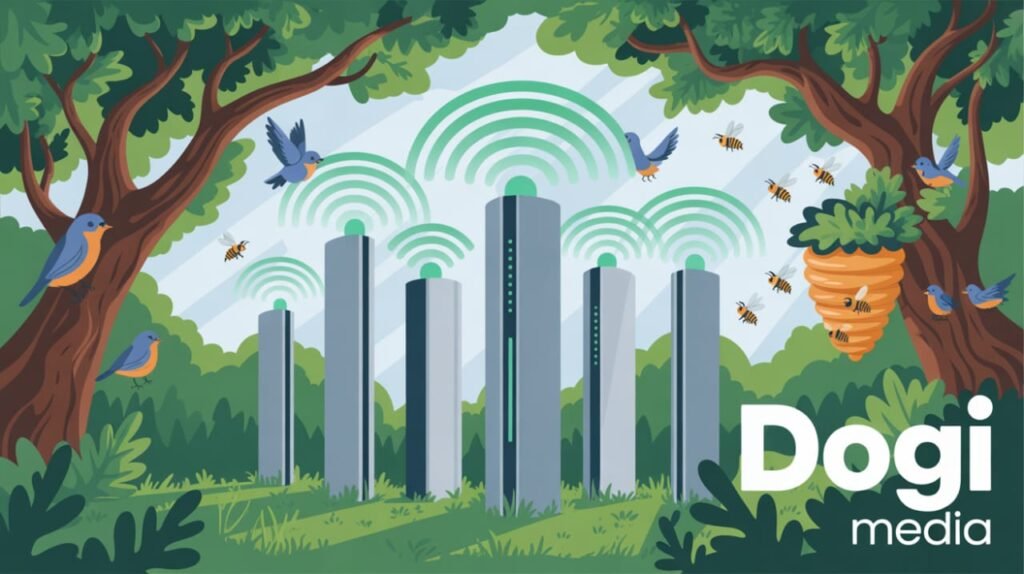
Birds and insects are especially vulnerable to electromagnetic radiation. Studies suggest that radiation may interfere with their navigation, reproduction, and overall health.
Bees, which are crucial for pollination, could be at risk, further harming the balance of ecosystems.
Radiation could also disturb natural habitats, leading to biodiversity loss.
Although research is ongoing, the potential ecological risks of 5G radiation cannot be ignored.
Resource Extraction for 5G Infrastructure
To build 5G networks, huge amounts of rare earth metals and other natural resources are required.
Mining for these materials causes deforestation, soil erosion, and water pollution.
Extracting resources like cobalt and lithium for batteries creates environmental destruction in many parts of the world.
The demand for raw materials increases greenhouse gas emissions during mining and transportation.
Thus, the entire supply chain of 5G contributes to environmental degradation.
Impact on Climate Change
When we consider energy consumption, e-waste, and resource extraction together, it becomes clear that 5G is accelerating climate change.
Fossil fuel-based energy used to power 5G networks emits large quantities of CO₂.
Increased carbon emissions contribute to global warming.
More frequent use of smart devices connected via 5G also adds to the energy burden.
While 5G may help in developing green technologies, its current deployment model seems more harmful to the planet.
Arguments in Favor of 5G Network (Balanced Perspective)
Although the environmental harm is evident, it is also necessary to acknowledge the arguments in favor of 5G:
It could reduce travel by enabling virtual meetings, lowering carbon emissions.
Smart energy grids powered by 5G may optimize electricity usage.
5G technology could support precision farming, which reduces water and pesticide waste.
These benefits show that the environmental harm is not inevitable. It depends on how the technology is used and regulated.
Solutions to Reduce Environmental Harm
Green Energy for 5G Towers
If 5G towers run on renewable energy like solar and wind, energy consumption would have a lower environmental impact.
Recycling E-Waste
Governments and companies must set up strong e-waste recycling systems to prevent harmful disposal of electronic devices.
Eco-Friendly Infrastructure
Using sustainable materials and energy-efficient designs can reduce the negative impact of building new 5G infrastructure.
Stricter Regulations on Radiation
Authorities should enforce radiation safety standards to protect wildlife and biodiversity.
Public Awareness Campaigns
Educating people about proper device disposal, recycling, and responsible usage can create a balance between technology and environment.
Conclusion
The arrival of 5G networks has revolutionized digital communication, but at the same time, it has also harmed the environment in multiple ways. From rising energy consumption and growing e-waste to potential threats to biodiversity and climate change, the effects are undeniable. However, with the right policies, innovation, and responsible use, these challenges can be reduced.
If humanity truly wants to embrace the benefits of 5G, then it must also take responsibility for protecting the planet. Only then can we ensure a sustainable digital future where technology and nature exist in harmony.
Read More Blogs : https://dogimedia.com/blog/
Subscribe Now : https://youtube.com/@xworldconsultancy
Follow Us On Instagram : https://www.instagram.com/xworldconsultancy
Follow Us On X : https://x.com/xwconsultancy
5g network is very fast network is good
Wow super nice
5g network harmed invironment
Great
Nice article
Nice information
Good information
Great information about our environment
5g is best for network but not for environment
Nice information
5g speed आने से नेट का speed बड़ा h network problem bhi नहीं है
Nice information
5g is gad for environment
Network harm
“Excellent article! It clearly highlights the environmental challenges of 5G, from energy consumption and e-waste to biodiversity risks. It’s a good reminder that while technology brings progress, responsible use and sustainable practices are essential to protect our planet.”
Super
In this blog marion how 5g network harm and its relief
Good information
Great job! Keep up the incredible work. I look forward to reading more from you.
(Educating people about proper device disposal, recycling, and responsible usage can create a balance between technology and environment.
Fossil fuel-based energy used to power 5G networks emits large quantities of CO₂.) this is mean topic of all sections
(Educating people about proper device disposal, recycling, and responsible usage can create
Fossil fuel-based energy used to power 5G networks emits large quantities of CO₂.) this is mean topic of all sections
It’s about 5g network harm environment the benefits of 5G 5 then it must also take responsibility for protecting the planet planet only then can be ensure our sustainable digital future technology and nature uska pahle fold kar fold kar usko exist in harmony
Nice information 👌
“5G networks’ increased energy consumption and e-waste generation raise environmental concerns. Sustainable deployment and responsible disposal practices are crucial to mitigate its ecological footprint.”
“5G networks’ increased energy consumption and e-waste generation raise environmental concerns.
“5G’s environmental impact demands attention, requiring sustainable practices to reduce energy consumption and e-waste.”
Amazing artical 😊
Shandar
Very nice
Massive infrastructure: Unlike 4G, 5G needs dense networks of small cells installed on buildings, poles, and towers.Authorities should enforce radiation safety standards to protect wildlife and biodiversity.
True nice article
Very nice
Yes 5g network has create a problem
5G network is fst network
5g is sensitive frequency
Best article
This is a very important discussion. While 5G brings speed and innovation, we cannot ignore its hidden environmental costs—more energy use, dense infrastructure, and electronic waste. Technology should not come at the expense of nature. It’s crucial to balance progress with sustainability by adopting greener energy solutions and eco-friendly infrastructure. Awareness like this helps us move toward responsible innovation.
Yes this very dangerous for over environment we have to stop this
This is dangerous
Great blog posts
Good 👍
Good bcs more changing
5g network se jo chote bird hai vo din pe din kam hote Jaa rahe hai
Great
Super 👍
This is a very insightful article. While 5G is a big step forward in technology, it’s important to also discuss the environmental costs. Innovation should go hand in hand with sustainability so that progress doesn’t harm our planet.
Ye bahut hi sochne bali bat h ki jabse 5g network aaya htb se hi purane network ko bhul gye h or hume iska nuksan samajh nhi aarha h 5g network se hume kafi nuksan. Ka samna Krna pad sakta h humare pasu pakjhi ko bhi carens ka dar laga rhta h or jisase paryavaran ko bhi nuksann pahuchta h yah network hba ki tarah fail rha h or humare aavarad ko nuksan pahucha rha h
👍❤️
👍🏻👍🏻
Radiation
It is also harmful the environment in multiple ways.5G network is dangerous for over environment we have to stop this.this is a very helpful article.
Great
5g नेटवर्क आज के समय में मानव जीवन को सुविधाएं प्रदान करा रहा है। परन्तु ये हमारे पर्यावरण को बहुत नुकसान पहुंचा रहा है
🔥🔥
Great job
Great Article ❤️
लेख बहुत अच्छा है
Nice article by this we know how 5g harm our environment and to for reduce balanced perceptive
Nice information
Nice information
Nice
Superb
Great choice
5g network se jo chote bird hai vo din pe din kam hote Jaa rahe hai
5g network ke karan jo chote chote bird hai vo vilupt ho ja rahe
The arrival of 5G networks has revolutionized digital communication, but at the same time, it has also harmed the environment in multiple ways.
Network resources
Radiation
Radiation 😅😅😅😅
Good
5g network is important digital india
Nice information
Nice
Nice
5G network ki tezi aur suvidhaen zaroori hain, lekin paryavaran par iske prabhav ko bhi dhyan mein rakhna chahiye
Paryavaran aur jeev-jantuon par 5G ke prabhav ke baare mein aur adhik research aur Environmental Impact Assessments ki zaroorat hai 📚.”
Good network
5g is harmful for environment
Yes this very dangerous for over environment we have to stop this
Good
The 5g network has killed so many birds and at all it harm many things
5G network sach me bht harmful hai humare environment ke liye environment ke har ek chiz jaise trees, birds water,river,forest sabke liye bht hanikarak hai 5g network ke karan birds ka jeevan khatre me hai
Good
Yes its also very bad for the birds
Good info
High frequency of 5G data
Good information
👍👍👍👍
Nice information 👍👍
Good
👍👍
Having 5g network is harmful to health
5G network good information
Nice
So beautiful ❤️❤️❤️❤️
👍 right
5gb network Ke Karan bahut Si problem ho sakti hai isliye is problem ka solution bahut jyada jaruri hai
The rollout of 5G has made many 4G devices obsolete, leading to massive disposal of smartphones, routers, and modems.
Telecom companies are replacing old towers and equipment with 5G-compatible hardware.
Most of this discarded equipment contains toxic materials like lead, mercury, and cadmium, which pollute soil and water.
This rapid turnover of devices contributes to an ever-growing e-waste crisis.
It is also harmful the environment in multiple ways.5G network is dangerous for over environment we have to stop this.this is a very helpful article.
Good
Very Nice
Very good
5g network aaj ke time sab chahte hai apne phone me kyu ye network kaafi fast chalta hai but isse nature ko kafi danger jhelna padta hai .
5G may help in developing green technologies, its current deployment model seems more harmful to the planet.
5G may help in developing green technologies, its current deployment model seems more harmful to the planet. It very important article & give important information 👌🏻
5G may help in developing green technologies, its current deployment model seems more harmful to the planet. It very important article & give important information 👌🏻
5G may help in developing green technologies, its current deployment model seems more harmful to the planet. It very important article & give important information 👌🏻
5G may help in developing green technologies, its current deployment model seems more harmful to the planet. It very important article & give important information 👌🏻 .5G network very harmful to awareness.
It very important article & give important information 👌🏻 .5G network very harmful to awareness.
Super
Yes true. We have we have seen the movie Robot 2.0. which is all about this. Environment to we have to be alert
Yes true. We have we have seen the movie Robot 2.0. which is all about this. Environment to we have to be alert …. Abhi nahin jaate Hain to aage ke liye Ham nahin dikkat hogi
Yess it’s really about birds
Because very harmful 5G network
So guys spread awareness about 5G network
Nice article 👍
5g network suvidha ke sath sath nature ke liye asuvidha hai
Its a very good article
And it shows how it harmful for birds