Introduction: Understanding Income Inequality in India
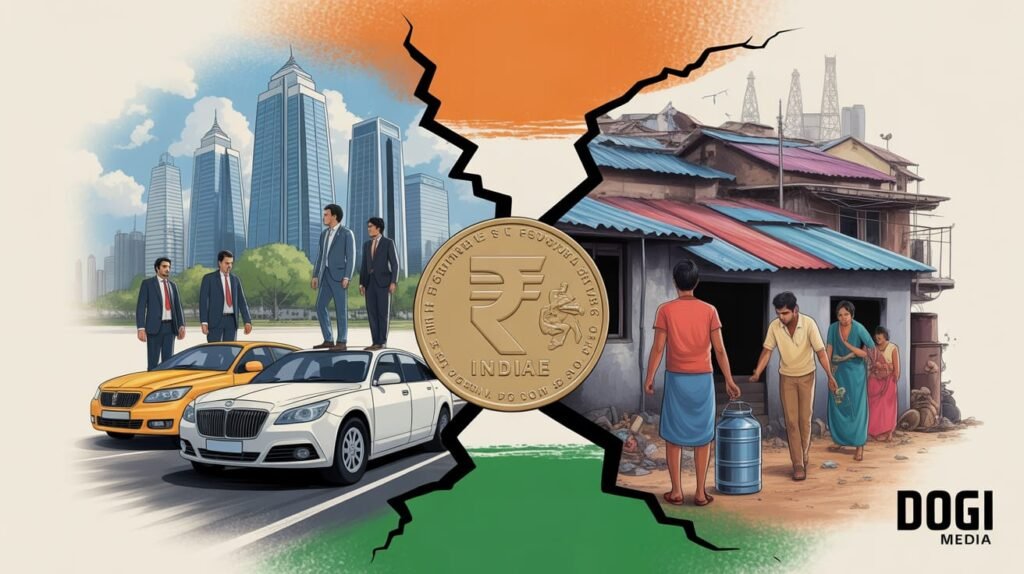
Income inequality is one of the most pressing social and economic challenges facing India today. Despite being one of the fastest-growing economies in the world, India continues to struggle with a wide gap between the rich and the poor. While a small percentage of the population enjoys immense wealth, millions of Indians still live below the poverty line. This uneven distribution of income has serious implications for the country’s social harmony, economic stability, and long-term growth.
In this blog, we will explore the causes, impacts, and possible solutions to income inequality in India. Additionally, we will analyze how this inequality affects different sections of society and what steps the government and citizens can take to reduce it.
What Is Income Inequality?
Income inequality refers to the unequal distribution of income among individuals or households within an economy. It means that some people earn significantly more than others. In a country like India, income inequality is not just about the gap between rich and poor—it also reflects differences in access to education, healthcare, employment, and opportunities.
Moreover, income inequality can be measured using tools such as the Gini coefficient, which helps economists understand the level of disparity in a society. A higher Gini coefficient indicates greater inequality, while a lower number shows a more balanced distribution of wealth.
Historical Context: How Did Inequality Develop in India?
To understand income inequality in India, it is essential to look at its historical roots. Even before independence, India’s social and economic systems were deeply unequal. The caste system, land ownership patterns, and limited access to education created layers of privilege and poverty.
After independence in 1947, India adopted a mixed economic model, focusing on industrialization and public welfare. Although this model aimed to reduce inequality, economic growth was slow in the first few decades. Wealth remained concentrated among industrialists, landlords, and business elites.
When India liberalized its economy in 1991, growth accelerated rapidly. New industries, technology, and foreign investments transformed the economy. However, this growth benefited certain sections of society far more than others. As a result, the income gap began to widen once again.
Current State of Income Inequality in India
According to recent studies, India ranks among the most unequal countries in the world. The top 10% of Indians own more than 75% of the nation’s wealth, while the bottom 50% share less than 10%. This imbalance shows how economic progress has not been equally distributed.
Urban areas have witnessed massive economic expansion due to IT, finance, and real estate sectors. In contrast, rural areas still depend heavily on agriculture, where income levels are low and uncertain. Moreover, informal workers—who make up nearly 80% of India’s workforce—earn significantly less and lack job security.
Income inequality is also visible across states. For example, Maharashtra, Karnataka, and Delhi have higher average incomes, while Bihar, Uttar Pradesh, and Jharkhand lag behind. This regional imbalance contributes further to inequality in living standards and opportunities.
Key Causes of Income Inequality in India
Unequal Access to Education
Education plays a crucial role in determining income levels. However, millions of children in India do not have access to quality education. Rural schools often lack teachers, infrastructure, and resources. Consequently, students from poor families struggle to compete with those from urban and privileged backgrounds.
As a result, the educated elite secure high-paying jobs, while the less educated remain in low-wage employment. This educational divide continues to widen income inequality over generations.
Unemployment and Underemployment
Despite economic growth, India faces high levels of unemployment and underemployment. Many people, especially youth, work in informal sectors with irregular income. Even skilled graduates often take up jobs that pay less than their qualifications deserve.
Furthermore, lack of industrial diversification means that job creation has not kept pace with population growth. Consequently, while a small group benefits from high-income jobs in modern sectors, the majority struggle to earn a stable livelihood.
Urban-Rural Divide
The income gap between urban and rural India remains stark. Cities offer better education, healthcare, and employment opportunities, attracting large numbers of migrants from villages. However, rural areas continue to depend on agriculture, which faces challenges like low productivity, climate change, and poor infrastructure.
This rural stagnation limits income growth for millions of Indians, while urban centers accumulate wealth and development.
Gender Inequality
Gender plays a significant role in income disparity. Women in India earn less than men for the same work, and their participation in the labor force remains low. Cultural and social barriers often prevent women from accessing education or pursuing careers.
Consequently, women’s financial independence is restricted, contributing to overall income inequality in society.
Caste and Social Discrimination
Caste-based discrimination continues to influence access to jobs, education, and resources. Despite constitutional safeguards, marginalized communities such as Dalits and Adivasis often face barriers to economic mobility.
As a result, they remain stuck in low-income occupations, while historically privileged groups dominate higher-paying professions and businesses.
Technological Divide
The rapid rise of technology and automation has increased productivity but also widened the income gap. High-skilled workers in the tech industry earn significantly more than those in traditional sectors. Meanwhile, low-skilled jobs are being replaced by machines or outsourced, leaving many workers unemployed or underpaid.
Policy and Taxation Issues
India’s taxation system is often criticized for being insufficiently progressive. Wealthy individuals and corporations can exploit loopholes to minimize taxes, while the poor continue to bear the burden of indirect taxes.
Additionally, inadequate welfare programs and uneven implementation of government schemes fail to bridge the income gap effectively.
Impacts of Income Inequality in India
Income inequality affects not just individuals, but the entire nation. Its consequences are both economic and social, influencing everything from productivity to political stability.
Economic Slowdown
When income is concentrated among the wealthy, overall demand in the economy decreases. The rich tend to save more, while the poor spend most of their income on basic needs. Thus, reduced consumption limits business growth, resulting in slower economic expansion.
Increased Poverty and Unemployment
Income inequality pushes a large section of society into poverty. With limited access to education, healthcare, and employment, poor families struggle to improve their living conditions. Over time, this leads to a cycle of poverty that becomes difficult to break.
Social Tensions and Unrest
A society where a few people enjoy extreme wealth while many live in deprivation often experiences social unrest. Frustration among the poor can lead to protests, strikes, and even violence. Consequently, income inequality threatens the social fabric and harmony of the nation.
Poor Health and Education Outcomes
People with low income cannot afford quality healthcare or education. This results in poor health, high mortality rates, and low literacy levels. Over time, the lack of access to these essential services further deepens inequality.
Political Inequality
Economic power often translates into political influence. Wealthy individuals and corporations can shape policies in their favor, leaving the poor with little representation. As a result, public policies may cater to the elite, widening inequality even more.
Government Policies and Efforts to Reduce Inequality
India has introduced several policies aimed at reducing income inequality. Though these programs have made some progress, much more needs to be done.
Mahatma Gandhi National Rural Employment Guarantee Act (MGNREGA)
This flagship program guarantees 100 days of employment each year to rural households. It provides income security to millions of poor families and helps reduce rural poverty. However, delayed payments and poor implementation still limit its effectiveness.
Direct Benefit Transfers (DBT)
Through DBT, government subsidies and welfare benefits are transferred directly into beneficiaries’ bank accounts. This method reduces corruption and ensures that funds reach those who need them most.
Skill Development Programs
Initiatives such as Skill India Mission aim to provide vocational training to youth. By improving employability, these programs can help reduce unemployment and income disparity.
Progressive Taxation
A more progressive tax system ensures that the wealthy contribute a fairer share of taxes. While India has some progressive elements, tax evasion and loopholes often weaken the system’s impact.
Education and Health Reforms
Investing in quality education and affordable healthcare is one of the most effective ways to reduce income inequality. Programs like the National Education Policy (NEP) and Ayushman Bharat have been launched to improve accessibility and affordability in these sectors.
The Role of Technology and Innovation
Technology can be both a cause and a cure for income inequality. On one hand, it has created high-income opportunities for skilled professionals. On the other, it has replaced traditional jobs and widened the digital divide.
However, if used wisely, technology can become a tool for inclusion. Digital platforms can connect rural entrepreneurs to markets, improve access to education through e-learning, and enhance government transparency.
What Can Be Done to Reduce Income Inequality in India?
Strengthening Education
Ensuring access to quality education for all children—regardless of location or background—is key to reducing income gaps. Schools in rural areas must be equipped with better infrastructure, trained teachers, and digital tools. Moreover, education should focus on skill-building rather than rote learning.
Promoting Inclusive Growth
Economic growth must include all sections of society. Investments in rural industries, agriculture, and small businesses can create jobs and distribute income more fairly. Encouraging entrepreneurship among women and marginalized communities is equally important.
Reforming Taxation and Welfare Systems
The government should close tax loopholes and strengthen progressive taxation. At the same time, welfare programs must be efficiently targeted to those in genuine need. Transparency and accountability in social schemes can make them more effective.
Empowering Women
Policies that promote women’s education, equal pay, and participation in the workforce can significantly reduce income inequality. Empowered women contribute not only to family income but also to national development.
Encouraging Fair Wages
The government should enforce minimum wage laws more strictly, especially in the informal sector. Employers must ensure fair compensation and safe working conditions for all workers.
Bridging the Digital Divide
Access to the internet and digital skills should become a basic right. By connecting rural areas to the digital economy, millions of people can access new markets, jobs, and learning opportunities.
Conclusion: Building a Fair and Equitable Future
Income inequality in India is not just an economic problem—it is a moral and social challenge that affects every aspect of national life. Although the country has achieved remarkable progress in technology, infrastructure, and global influence, true development can only be achieved when prosperity is shared by all.
Reducing inequality requires a combined effort from the government, private sector, and citizens. With inclusive policies, quality education, gender equality, and fair taxation, India can move toward a more just and balanced society.
Ultimately, a nation grows stronger when every individual has an equal opportunity to succeed. Therefore, tackling income inequality is not merely an option—it is essential for India’s sustainable future.
Read More Blogs : https://dogimedia.com/blog/
Subscribe Now : https://youtube.com/@xworldconsultancy
Follow Us On Instagram : https://www.instagram.com/xworldconsultancy
Follow Us On X : https://x.com/xwconsultancy