1. Introduction
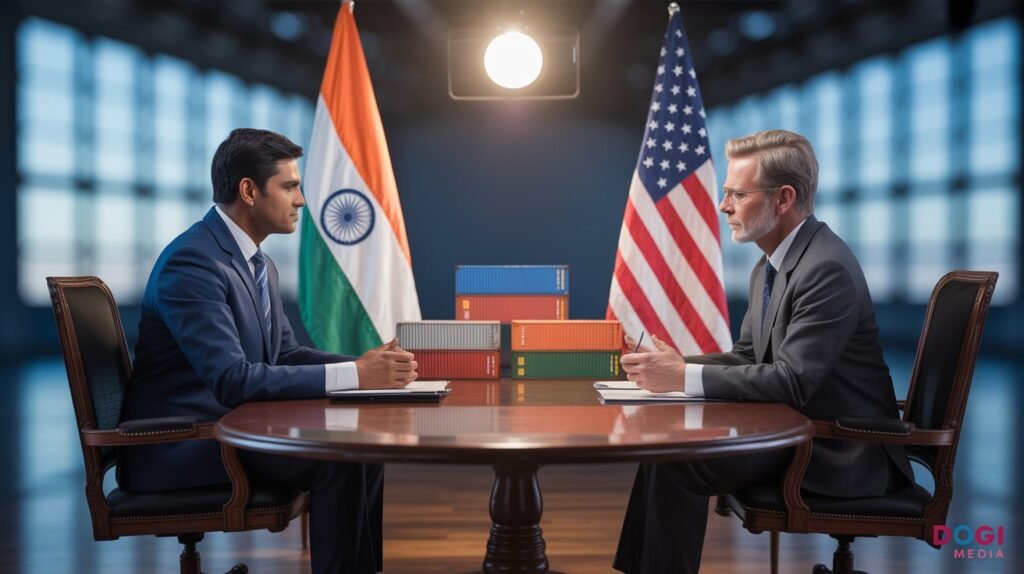
The India America relationship, long characterized by strategic cooperation, economic interdependence, and growing people-to-people ties, has now entered a period of unprecedented uncertainty. Over the past several decades, both nations have consistently emphasized shared democratic values, common security concerns, and a mutual interest in global stability. However, in August 2025, a series of punitive economic measures, combined with sharp diplomatic disagreements, triggered a cascade of tensions. As a result, the traditionally stable partnership began to fracture, prompting both sides to re-evaluate the very foundation of their bilateral engagement. Consequently, what was once seen as an unshakable alliance is now undergoing a period of intense reassessment, raising critical questions about the future trajectory of Indo-American relations.
2. Background: India America Relationship Built on Shared Strategic Interests
For decades, India–America relations have steadily evolved from cautious post-independence diplomacy into a comprehensive and multifaceted partnership. Initially, both countries engaged with mutual suspicion, shaped by Cold War alignments and differing national priorities. Over time, however, successive leaders in both New Delhi and Washington recognized the strategic benefits of cooperation. Consequently, their relationship gradually transformed into one grounded in shared democratic values, converging security interests, and growing economic interdependence.
3. Trigger: Trump’s Mediation Claim and Ceasefire Backlash
The immediate spark occurred in mid-2025, when former U.S. President Donald Trump publicly claimed that he personally mediated a ceasefire between India and Pakistan. India swiftly and firmly rejected this assertion, emphasizing that any ceasefire had been negotiated bilaterally and without U.S. involvement.
Unsurprisingly, this confrontation reignited earlier suspicions in the India–America relationship. As a result, many observers began questioning whether the long-standing narrative of trust and strategic solidarity could withstand such high-profile disputes. Moreover, Trump’s remarks—widely covered in both nations’ media—planted early signs of unease, signaling that personal diplomacy and politicized claims could undermine even carefully built partnerships.
4. Escalation: India America Tariffs on Indian Goods
Almost immediately afterward, the Trump administration raised tensions by imposing a 25% tariff on a wide range of Indian goods. Officials justified the move as retaliation for India’s continued purchases of Russian oil — a policy that Washington viewed as undermining U.S. sanctions and weakening strategic alignment.
These tariffs ranked among the harshest measures against India, directly making Washington one of New Delhi’s top punitive trade partners. The measures disrupted billions of dollars in bilateral commerce and eroded trust, reducing opportunities for dialogue.
Furthermore, the timing — coming right after major defense procurement discussions — signaled a clear shift in U.S. economic policy. Analysts say this confrontation amplified perceptions that political strategy, rather than trade cooperation, now drives Indo-American engagement.
5. Fallout in Trade Talks and Defense Procurement
As a direct consequence of the tariff escalation:
- The sixth round of trade negotiations, set for late August in Delhi, was abruptly canceled or deferred indefinitely by the U.S.
- Major defense procurements—from Stryker combat vehicles to Boeing P8I aircraft—were reported to be paused. Although India officially denied stopping purchases, the episode fueled distrust.
Collectively, these developments cast a long shadow over previously robust India America strategic ties.
6. Domestic & Economic Ramifications for India
Amid the tariff war:
- Calls to boycott U.S. brands like McDonald’s, Coca-Cola, Amazon, and Apple surged on social media, driving renewed focus on economic self-reliance.
- Yet, according to an ICRIER report, only about 7.38% of exports are impacted—equivalent to ~1.56% of GDP—though critical sectors like textiles, gems, jewelry, auto parts, agriculture, and shrimp borne the brunt.
Despite political posturing, the economic blow adds nuance to the India America confrontation: it’s significant but not catastrophic—at least not yet.
7. India America Strategic Implications and Political Fractures
Observers note that Trump’s “America First” approach, coupled with ideological posturing, has shifted the tone from alliance-building toward transactional diplomacy.
Meanwhile:
- Modi framed the standoff as a defense of Indian farmers, stating he won’t compromise even at personal cost.
- Analysts warn that eroding mutual trust could destabilize the India America partnership—once an anchor in Indo-Pacific strategy and counterbalancing China.
8. Additional Flashpoint: Deportation of Indian Nationals
Earlier, in February 2025, the U.S. deported 104 Indian nationals in a highly criticized operation—transported on a military plane, handcuffed, and chained. The incident—widely called “inhumane”—sparked outrage in India and raised diplomatic concerns unrelated to trade but affecting India America goodwill.
9. Outlook: Will Reconstruction Be Possible?
When viewed in totality:
- The tariffs are in place and unresolved.
- Trade dialogue remains stalled.
- Political tensions have seeped from talk shows into policymaking.
- Defence cooperation appears under review.
Still, many analysts emphasize that long-term recalibration is possible—provided both sides prioritize diplomacy over domestic posturing.
The Washington PostFinancial Times+1The DiplomatWikipedia
For India, navigating economic autonomy, protecting farmer interests, and maintaining strategic flexibility (especially with Russia and China) remains key. For America, recalibrating expectations and recognizing India’s sovereignty might be vital to preserving the broader India America framework.
10. Conclusion
The India America controversy of 2025 marks a significant inflection point. Once propelled by shared democratic ideals, common geopolitical interests, and expanding trade, the relationship is now marred by tariff warfare, diplomatic friction, and political messaging.
Yet, amid all this friction, one constant endures: both nations are too interlinked and strategically important to forego partnership entirely. What comes next hinges on whether they can transition from confrontation to conversation—without sacrificing face, livelihoods, or long-term strategic vision.
Nice article
india america controversy
Useful information
India is great
America is now lowr
Controversy
Nice information
The 2025 India–America trade and diplomatic tensions highlight how fragile even long-standing strategic partnerships can be under economic and political pressure. Both nations need transparent dialogue and mutual respect to restore trust and ensure long-term cooperation.”
You have amazing potential!
अमेरिका के टैरिफ पर भारत का पलटवार
Good
India and america
Nice
Nice information
Nice 🙂
India America controversy both nations are inters linked and strategically important to forgot partnership entirely
Nyccc article 👍
Good
“Divisive reporting sparking tensions between India and America.”
America is best friend
Polarizing headlines straining India-US diplomatic ties.
Media bias fuelling diplomatic discord between India and US.
Super
The sixth round of trade negotiations, set for late August in Delhi, was abruptly canceled or deferred indefinitely by the U.S.
Major defense procurements—from Stryker combat vehicles to Boeing P8I aircraft—were reported to be paused. Although India officially denied stopping purchases, the episode fueled distrust.
Collectively, these developments cast a long shadow over previously robust India America strategic Modi framed the standoff as a defense of Indian farmers, stating he won’t compromise even at personal cost.
Analysts warn that eroding mutual trust could destabilize the India America partnership—once an anchor in Indo-Pacific strategy and counterbalancing China..
The sixth round of trade negotiations, set for late August in Delhi, was abruptly canceled or deferred indefinitely by the U.S.
Major defense procurements—from Stryker combat vehicles to Boeing P8I aircraft—were reported to be paused. Although India officially denied stopping purchases, the episode fueled distrust.
Collectively, these developments cast a long shadow over previously robust India America strategic Modi framed the standoff as a defense of Indian farmers, stating he won’t compromise even at personal cost.
Analysts warn that eroding mutual trust could destabilize the India America partnership—once an anchor in Indo-Pacific strategy to china
Good information
Nice article
Nice
India–America संबंध हमेशा रणनीतिक सहयोग और साझा मूल्यों पर आधारित रहे हैं। लेकिन हालिया विवाद यह दर्शाता है कि अंतरराष्ट्रीय रिश्तों में भरोसे और पारदर्शिता कितनी अहम है। किसी भी कूटनीतिक मतभेद को संवाद और सम्मानजनक तरीके से सुलझाना ही दोनों देशों के हित में होगा, ताकि यह साझेदारी फिर से मजबूती की ओर लौट सके।
Best amazing
Good blog
🙂🙂🙂 informative blog
Sarvottam 👍
Good
Vyarth hai sab
Best vlog 💯
Good nice
Wow 😳😳😳
Nice information about international news
A critical time for Indo-US ties hope diplomacy prevails.
👍👍
😕😕
Indian American controversy
Nice
Osm
Nice blog
Good blog
Nice Good blog
Nice blog
Nice
Nice 👍
Most important blog
Impart bilog
Amazing
Nice and informative
👍👍👍👍👍
Nice
Good
A critical time for Indo-US ties hope diplomacy prevails.
Nice
Critical information ℹ️
Wonderful 😊
Inspired
Osm 👌
Nice
Nice one
Great
Good
Good information
This is illogical
Super se upar🤩
Nice
Amazing
Best
Complete knowledge
Super
Good blogs
Amazing
Earlier, in February 2025, the U.S. deported 104 Indian nationals in a highly criticized operation—transported on a military plane, handcuffed, and chained. The incident—widely called “inhumane”—sparked outrage in India and raised diplomatic concerns unrelated to trade but affecting India America goodwill.
The India America controversy of 2025 marks a significant inflection point.
Good
Good
Osmmmm
Mast superbbb
Kya bat hai
Great information
Informative article 💯
Dogi media is really dogli
Well great informative blog 👍🏻 I’m satisfied
Dogi media is really dogli
Well great informative blog 👍🏻 I’m satisfied
Great informative
Good Information
Great
What to say about another country just the love to read the comments of everyone
Good
Nice article
The India America controversy of 2025 marks a significant inflection point.
Great information
Nice article