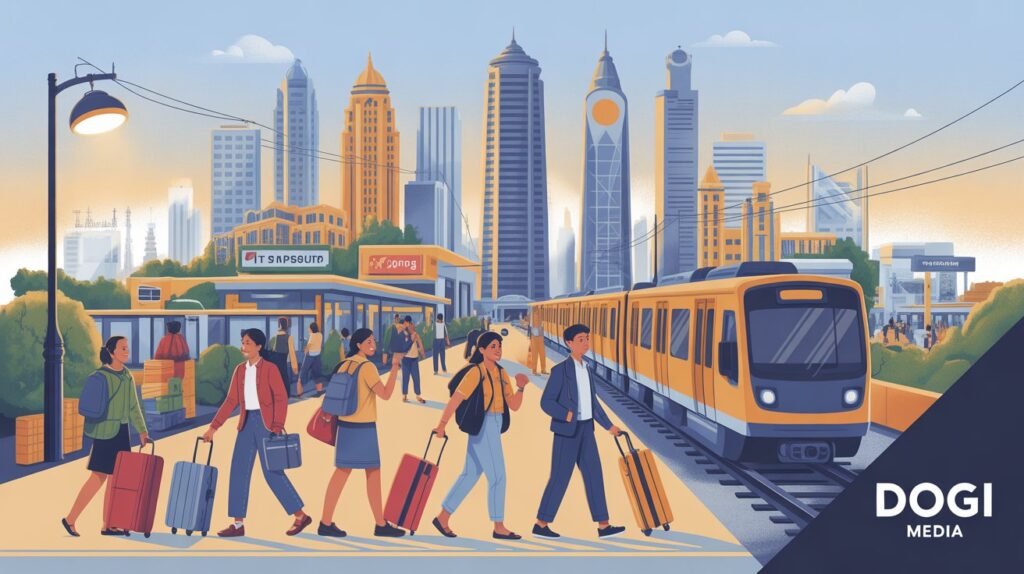
Introduction- Metro Cities
In today’s rapidly changing world, the migration of people from small towns and villages to metropolitan cities has become one of the most noticeable social and economic trends. Metro cities like Delhi, Mumbai, Bengaluru, Hyderabad, Chennai, and Kolkata have become magnets for millions of people across India. The reasons behind this migration are not limited to just job opportunities; rather, they extend to lifestyle, education, healthcare, and even personal aspirations.
Moreover, as globalization and urbanization continue to influence our lives, the attraction toward metropolitan areas only seems to be growing. However, to truly understand this phenomenon, we must explore the multiple dimensions of why people prefer moving to these bustling cities despite their challenges.
Historical Context of Migration to Metro Cities
Migration to big cities is not a new concept. Historically, industrialization played a vital role in pulling people away from agriculture-based economies toward manufacturing and services. For example, during the mid-20th century, cities like Mumbai saw massive influxes of workers due to textile mills and port-based industries.
Consequently, with the rise of the information technology revolution in the 1990s, Bengaluru and Hyderabad became major hubs for job seekers. Therefore, the movement toward cities has always been aligned with economic opportunities and better living conditions.
Employment Opportunities: The Primary Pull Factor
One of the strongest reasons why people move to metro cities is the availability of employment opportunities.
Diverse Job Markets
Metro cities host a wide variety of industries such as IT, finance, entertainment, manufacturing, healthcare, and hospitality. Unlike smaller towns, these cities have multinational corporations, start-ups, and large-scale industries that generate thousands of jobs.
Career Growth and Exposure
Furthermore, people not only move for jobs but also for career growth. Metro cities provide better exposure, skill development opportunities, and professional networks. For instance, Bengaluru is widely known as the “Silicon Valley of India,” offering countless opportunities for tech professionals.
Education and Academic Aspirations
Another major reason for migration is access to high-quality education.
Schools and Colleges
Parents want the best for their children, and metro cities provide world-class schools, universities, and coaching institutes. Many reputed institutions, such as IITs, IIMs, and AIIMS, are either located in or near metropolitan areas.
Skill Development
Additionally, cities offer vocational training centers, foreign language schools, and professional certifications that are not easily available in smaller towns. Therefore, students move to metro areas to increase their chances of building a strong career foundation.
Healthcare and Medical Facilities
Healthcare is a fundamental factor driving migration. Metro cities provide advanced medical facilities and specialized treatments.
Specialized Hospitals
Cities like Delhi and Mumbai host top hospitals such as AIIMS, Fortis, and Apollo. These institutions offer world-class treatment options that are unavailable in tier-2 and tier-3 towns.
Emergency Care
In addition, access to emergency services, diagnostic centers, and advanced surgeries make metro cities a safer choice for families concerned about health security.
Lifestyle and Social Infrastructure of Metro Cities
Metro cities also offer a better lifestyle, which is another important attraction.
Entertainment and Leisure
From multiplexes, malls, and theatres to sports complexes and fine-dining restaurants, metro cities provide endless entertainment options. This lifestyle is highly appealing to young professionals and families alike.
Connectivity and Convenience
Public transport systems like metro rail, airports, and cab services make commuting easier. Moreover, the availability of 24/7 services such as supermarkets, medical shops, and restaurants ensures convenience that smaller towns lack.
Better Standard of Living in Metro Cities
The perception of an improved standard of living drives many families to move to urban areas.
Modern Housing Options
People can choose from a wide variety of housing facilities ranging from luxury apartments to affordable flats. Gated communities with amenities like gyms, parks, and swimming pools are highly sought after.
Urban Amenities
Access to clean drinking water, better sanitation, and modern infrastructure further enhance the quality of life in metro cities.
Exposure to Diversity and Culture
Living in metro cities exposes individuals to cultural diversity and inclusiveness.
Cosmopolitan Environment
Since people from different states and even countries reside in these cities, they become melting pots of cultures. This allows individuals to broaden their perspectives and develop better social adaptability.
Festivals and Celebrations
Moreover, festivals like Diwali, Eid, Christmas, and regional events are celebrated with equal enthusiasm, which makes city life vibrant and socially fulfilling.
Opportunities for Women and Youth
Metro cities often provide more independence and opportunities for women and young people.
Women Empowerment
From professional jobs to entrepreneurship, cities open doors for women to participate in the workforce. Furthermore, better safety measures and legal awareness make metros relatively safer for women compared to rural areas.
Youth Aspirations
Young people are highly attracted to metro cities due to career prospects, social life, and freedom of choice. Additionally, metro culture promotes creativity, innovation, and personal growth.
Technological and Digital Advancements
Metropolitan areas are often the first to adopt new technologies.
Digital Infrastructure
High-speed internet, co-working spaces, and e-commerce services make life more efficient in cities. Consequently, entrepreneurs and freelancers prefer living in metro areas.
Smart City Initiatives
Government initiatives such as smart cities further enhance urban living by providing better governance, traffic management, and pollution control.
Challenges of Metro Cities Life
While metro cities offer several benefits, they also present challenges.
High Cost of Living
Rent, transportation, and education expenses are significantly higher compared to smaller towns. This often creates financial pressure on families.
Overcrowding and Pollution
Massive population growth leads to traffic jams, overcrowded public transport, and increased pollution levels.
Stress and Competition
The fast-paced lifestyle in metro cities may lead to stress, mental health issues, and high competition in workplaces.
Balancing Pros and Cons
Despite challenges, people continue to migrate to metro cities because the benefits often outweigh the disadvantages. Job security, better living conditions, and growth opportunities are strong motivators. Moreover, the aspirational lifestyle of urban centers pushes individuals to overcome difficulties.
Future of Migration Trends
Looking ahead, migration toward metro cities is expected to continue. However, the rise of tier-2 cities like Pune, Chandigarh, and Jaipur may balance the pressure. With increasing digital work culture, remote jobs may also slow down migration to an extent. Yet, metropolitan areas will remain the backbone of economic and social development.
Conclusion
In conclusion, the reasons why people are moving to metro cities are multifaceted. From job opportunities and education to lifestyle and healthcare, the benefits of living in metropolitan areas continue to attract millions. Although life in metro cities comes with challenges such as high costs and stress, the promise of a brighter future keeps migration alive.
Therefore, metro cities will always remain the center of opportunities, aspirations, and growth in India’s development journey.
Read More Blogs : https://dogimedia.com/blog/
Subscribe Now : https://youtube.com/@xworldconsultancy
Follow Us On Instagram : https://www.instagram.com/xworldconsultancy
Follow Us On X : https://x.com/xwconsultancy
metro cities
Nice article
The work of the metro is very good, people can go here and there and their time as well as money is saved.
Good
Metro cities are very developed and multifaceted. Good 👍 information
यह जानकारी युवाओं को बहुत मददगार रहेगी
People are moving because of auto
People is. Move bcz of auto
Nice information
Nice information
Metro
“Excellent article! It clearly explains why people are moving to metro cities—from job opportunities and education to lifestyle, healthcare, and exposure to diversity. While challenges like high costs and pollution exist, the benefits of growth and development continue to attract millions. A very insightful read on urban migration trends in India.”
Moving
Metro cities attract to people for job
This is very well thought out!
दिल्ली मुंबई बंगलौर m मेट्रो ka network kafi तेजी से बढ़ा है
Nice information
Super
Nice information
“Metro cities attract people with better jobs, education, and lifestyle opportunities.”
About metro cities metro cities will always remain the centre of opportunities aspirations and growth in India’s development journey.
Great Article ❤️
Superbbb
Metro cities host a wide variety of industries such as IT, finance, entertainment, manufacturing, healthcare, and hospitality. Unlike smaller towns, these cities have multinational corporations, start-ups, and large-scale industries that generate thousands of jobs.While metro cities offer several benefits, they also present challenges.
High Cost of Living
Rent, transportation, and education expenses are significantly higher compared to smaller towns. This often creates financial pressure on families
Awesome
Super
Very very 👍 nice
Metro city is in kanpur also
Nice information
A very relevant analysis. Metro cities have always been centers of opportunity, attracting people with better jobs, education, and healthcare. However, the growing migration also highlights the urgent need to improve infrastructure and living conditions in smaller towns. Balanced regional development can reduce pressure on metros while ensuring that opportunities are more evenly spread across the country.
Nice information
Metro cities also offer a better lifestyle which is another important attraction from multiplexed malls and theatres
Best article
लेकिन गाँव में तनाव पूरण जीवन नहीं रहा है लेकिन बदलते भारत में गाँव में भी सब कुछ उपलब्ध हो रहा है
Metro cities
Good
In village there no future and very tough lifestyle so people move to metro cities for easy lifestyle
Great
Good work
In today’s rapidly changing world, the migration of people from small towns and villages to metropolitan cities has become one of the most noticeable social and economic trends. Metro cities like Delhi, Mumbai, Bengaluru, Hyderabad, Chennai, and Kolkata have become magnets for millions of people across India. The reasons behind this migration are not limited to just job opportunities; rather, they extend to lifestyle, education, healthcare, and even personal aspirations.
Niceee
So beautiful 😍
Metro cities are dreams for many but they come with challenges too
👍👍👍
By this article we know today generation move metro cities because easy life style ,employment, facilities
👍🏻👍🏻
Looking ahead, migration toward metro cities is expected to continue. However, the rise of tier-2 cities like Pune, Chandigarh, and Jaipur may balance the pressure. With increasing digital work culture, remote jobs may also slow down migration to an extent. Yet, metropolitan areas will remain the backbone of economic and social development.
Metro cities also offer a better lifestyle which is another important attraction from multiplexed malls and theatres
सर्वश्रेष्ठ लेख
Best article
मेट्रो शहर हमेशा भारत की विकास यात्रा में अवसरों, आकांक्षाओं और वृद्धि का केंद्र बने रहेंगे। यह बहुत अच्छा है
So nice
Nice
Metro cities are dreams for many but they come with challenges too
Great knowledge
By this article we know today generation move metro cities because easy life style ,employment, facilities
Nice
Good work
It is true
Nice information and it is true
I also say that it is nice
Nice
Metro Cities In today’s rapidly changing world, the migration of people from small towns and villages to metropolitan cities has become one of the most noticeable social and economic trends. Metro cities like Delhi, Mumbai, Bengaluru, Hyderabad, Chennai, and Kolkata have become magnets for millions of people across India. The reasons behind this migration
Best article
Good
“Metro cities like Delhi, Mumbai, Bangalore offer better job opportunities, infrastructure, and lifestyle. That’s why people are moving
But metro cities are getting overcrowded. Issues like traffic, pollution, and high costs of living are big challenges
Smaller towns need more development to stop the migration to metros. Balanced growth across regions is key
Good work
Yes all the facility available here
Right
Right
Nice
Article inspirational
Wow so beautiful 😍😍
Mast
Consequently, with the rise of the information technology revolution in the 1990s, Bengaluru and Hyderabad became major hubs for job seekers. Therefore, the movement toward cities has always been aligned with economic opportunities and better living conditions.
This website says reality
One of the strongest reasons why people move to metro cities is the availability of employment opportunities.
metro cities will always remain the center of opportunities, aspirations, and growth in India’s development journey.
Best information
Great information
This blog is about metro and it give us good knowledge about metro
Good
Good good
Good
students move to metro areas to increase their chances of building a strong career foundation.
students move to metro areas to increase their chances of building a strong career foundation. In every cities metro is very increasing so highly.
In every cities metro is very increasing so highly.
In every cities metro is very increasing so highly.this article is very amazing information about metro cities.
There is no more work in villages there is no facilities in British that’s why peoples are moving to the metro cities. So we can try to make a visit to Mar facilitated
Are People Really Moving to Tier 2 Cities in 2025? Here’s Why …People are moving to metro city,,
Very informative blog
In every cities metro is very increasing so highly.this article is very amazing information about metro cities.this blog is knowledgeable.
Good
So beautiful ❤️
Most wanted
It’s an amazing article
Wonderful
Good article