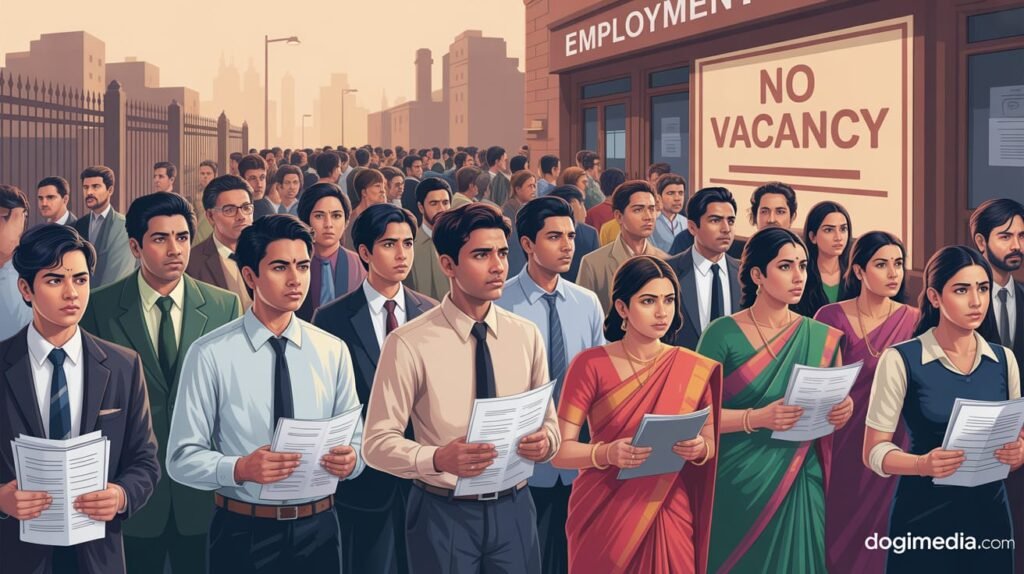
Introduction: The Alarming Rise of Unemployment in India
Unemployment has emerged as one of the most pressing challenges in India today. Every year, millions of young graduates enter the job market with dreams of stable employment, yet a large number remain jobless or underemployed. Despite being one of the fastest-growing economies, India is facing an unprecedented job crisis. The situation demands attention, as unemployment not only affects individuals but also weakens the foundation of our economy.
Moreover, the unemployment rate in India has touched alarming levels in recent years. According to various national surveys, the rate continues to fluctuate but remains significantly higher among the youth. This growing concern calls for immediate government action, private sector reforms, and skill development initiatives.
Understanding Unemployment: Meaning and Types
Before diving deeper, it’s crucial to understand what unemployment truly means. Unemployment refers to the situation where individuals who are willing and capable of working cannot find suitable jobs. It’s a clear indicator of an economy’s health — when unemployment rises, overall productivity declines, and social stress increases.
There are different types of unemployment, and each one impacts the economy in distinct ways:
- Structural
This occurs when there is a mismatch between the skills people possess and the skills required by employers. For example, as automation increases, traditional manufacturing jobs decline.
- Frictional
This type arises when individuals are temporarily between jobs. It’s short-term and often due to people switching careers or locations.
- Cyclical
It’s related to economic cycles. When the economy slows down, companies lay off workers, leading to higher unemployment.
- Seasonal
Common in agriculture and tourism, seasonal unemployment happens when work opportunities are available only during specific times of the year.
- Technological
With the rapid advancement of technology, machines often replace human labor, creating a new wave of unemployment.
Current Scenario: Why Unemployment Is at Its Peak
India’s unemployment crisis has reached new heights due to a combination of economic, structural, and social factors. While economic growth has been steady in some sectors, job creation has not kept pace.
- Slow Industrial Growth
Despite the “Make in India” initiative, manufacturing growth has been slower than expected. Automation and lack of modern infrastructure have limited job opportunities in industrial sectors.
- Population Explosion
India’s large population puts immense pressure on the job market. Every year, millions of young individuals complete their education and enter the workforce, but employment opportunities remain limited.
- Skill Mismatch
The Indian education system often focuses more on theoretical knowledge than practical skills. As a result, graduates find it difficult to meet industry expectations.
- Global Economic Impact
The global economic slowdown, along with geopolitical tensions, has affected India’s export-driven industries, causing layoffs and reduced hiring.
- Impact of Technology
While technology has improved efficiency, it has also led to job cuts in traditional sectors. The rise of artificial intelligence (AI) and automation continues to replace repetitive jobs.
Statistical Overview: The Numbers Speak Loudly
According to the Centre for Monitoring Indian Economy (CMIE), India’s unemployment rate has fluctuated between 7% and 9% in the past few years. Urban areas experience higher unemployment compared to rural regions. Youth unemployment — those aged 15 to 29 — remains alarmingly high, sometimes crossing 20%.
Moreover, female participation in the labor force remains low, with only about 25% of women actively employed. This gender gap further adds to the unemployment crisis.
The COVID-19 pandemic worsened the situation. Millions lost their jobs during lockdowns, and although recovery is ongoing, the pace remains slow. Many small and medium-sized enterprises (SMEs) are still struggling to regain stability.
The Social and Economic Impact of Unemployment
Unemployment does not just affect the economy; it also influences social stability and mental health. A society where large numbers of people are jobless often faces multiple challenges.
- Rising Poverty Levels
When individuals remain unemployed, their families struggle financially. This leads to an increase in poverty and a decline in living standards.
- Mental Health Issues
Joblessness often leads to stress, anxiety, and depression. Many individuals lose confidence in their abilities, creating long-term emotional scars.
- Increased Crime Rate
Studies have shown a link between unemployment and crime. When opportunities are scarce, people sometimes resort to illegal activities for survival.
- Reduced Economic Growth
A high unemployment rate results in lower productivity and decreased consumer spending, which directly hampers the country’s GDP growth.
- Brain Drain
Highly educated youth often migrate abroad for better opportunities. This “brain drain” results in the loss of skilled talent from India.
Government Initiatives to Tackle Unemployment
The Government of India has introduced several programs to reduce unemployment and promote self-employment. While the intent is positive, implementation challenges still exist.
- Make in India
Launched in 2014, this initiative encourages domestic manufacturing and aims to create millions of jobs. However, progress has been slower than expected.
- Skill India Mission
This program focuses on vocational training and upskilling youth to meet industry demands. It helps bridge the skill gap between education and employment.
- Startup India
Encouraging entrepreneurship is one of the best ways to combat unemployment. Startup India supports innovators through funding, mentorship, and tax incentives.
- MGNREGA
The Mahatma Gandhi National Rural Employment Guarantee Act provides 100 days of guaranteed employment in rural areas. It has been a lifeline for millions of rural families.
- Digital India
By promoting digital literacy and online job creation, this initiative has opened new doors in the gig and freelance economy.
Private Sector and Entrepreneurship: The New Job Creators
While the government plays an important role, the private sector and entrepreneurs have emerged as major contributors to employment. Startups, especially in technology, food delivery, logistics, and e-commerce, have created millions of jobs.
However, these jobs are often contractual and lack long-term stability. Still, they offer flexibility and exposure to modern work environments. The gig economy — powered by companies like Swiggy, Zomato, and Uber — has helped many Indians earn an income during difficult times.
Education System and Employability Gap
India’s education system needs a major overhaul to meet the needs of modern industries. While millions graduate every year, only a small percentage are employable.
Practical knowledge, soft skills, and real-world training must be integrated into the curriculum. Moreover, collaboration between educational institutions and companies can help students prepare better for job demands.
Vocational education and technical training are also essential. Countries like Germany have successfully used skill-based education to maintain low unemployment rates. India can learn from such global models.
The Role of Technology in Solving Unemployment
Technology, although a cause of job loss in some sectors, can also be part of the solution. Online learning platforms, freelancing websites, and remote work opportunities have created new forms of employment.
Digital platforms allow individuals to work from anywhere, reducing the dependence on traditional office jobs. Artificial Intelligence, if used wisely, can assist in upskilling workers and improving job matching systems.
Youth Unemployment: The Crisis Within the Crisis
India’s greatest strength is its youth population — but it’s also its greatest challenge. With more than 50% of Indians under the age of 30, job creation for this group is critical.
Youth unemployment remains high due to lack of experience, inadequate training, and unrealistic expectations. Government programs should focus more on internships, apprenticeships, and on-the-job training. Encouraging youth to explore entrepreneurship can also make a difference.
Possible Solutions to Reduce Unemployment
To bring unemployment under control, a multi-faceted approach is required. Some effective measures include:
Promoting skill-based education and vocational training
Encouraging small businesses and startups
Expanding the manufacturing and agricultural sectors
Supporting women entrepreneurs
Leveraging technology for remote and digital jobs
Strengthening public-private partnerships
Providing incentives for companies to hire fresh graduates
If these steps are taken seriously, India can gradually reverse the rising unemployment trend.
Conclusion: The Path Toward a Job-Rich Future
Unemployment in India is at its peak, but it is not irreversible. With proper planning, government support, and societal participation, India can turn this challenge into an opportunity. Every problem hides a potential solution, and unemployment is no different.
By investing in skill development, promoting entrepreneurship, and embracing innovation, India can build a future where every citizen finds meaningful employment. It’s time for collective action — from policymakers, industries, and individuals — to ensure that no capable person remains jobless.
The road ahead may be long, but with determination and unity, India can rise stronger and create a thriving, job-rich economy.
Read More Blogs : https://dogimedia.com/blog/
Subscribe Now : https://youtube.com/@xworldconsultancy
Follow Us On Instagram : https://www.instagram.com/xworldconsultancy
Follow Us On X : https://x.com/xwconsultancy